
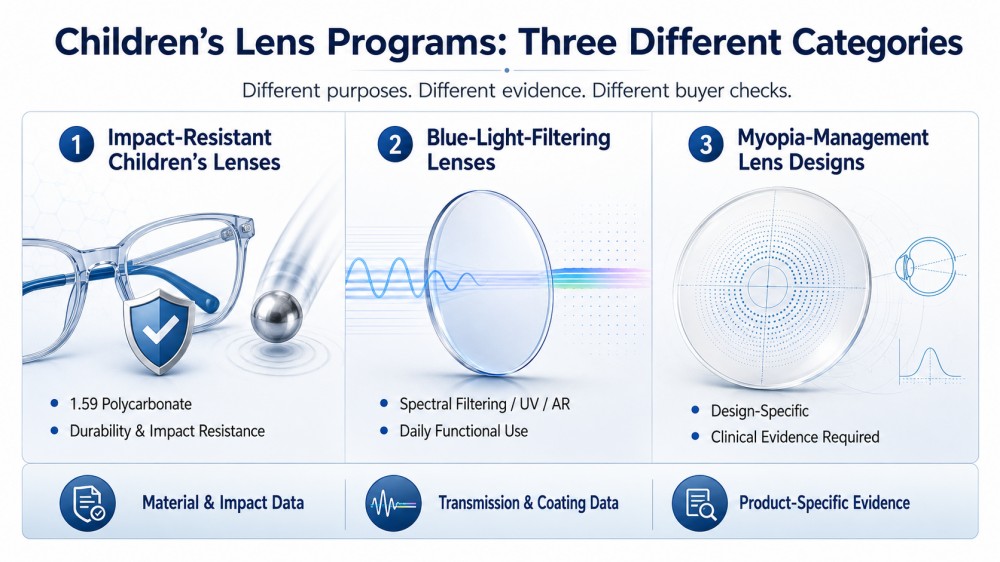
Optical retail chains and distributors are expanding their assortments for school-age children, but three product categories are often mixed together in marketing: impact-resistant children’s lenses, blue-light-filtering lenses, and myopia-management lens designs. They serve different purposes, require different evidence, and may be subject to different regulatory or dispensing requirements depending on the market.
A wholesale buyer should therefore evaluate each category on its own terms. This checklist explains what each category is intended to do, what documentation or testing to request, and where the line sits between a durable everyday children’s lens and a product specifically positioned for myopia management.
| Category | Primary Purpose | What Buyers Should Verify | Do Not Assume |
| Impact-resistant children’s lenses | Durability and impact resistance | Material, optical quality, power range, impact-test data | Myopia-management effect |
| Blue-light-filtering lenses | Selected spectral filtering, UV/AR features depending on specification | Transmission or spectral data, UV performance, optical quality, coating durability | Myopia control, treatment, or proven digital-eye-strain relief |
| Myopia-management lens designs | Design-specific myopia-management program where supported by evidence and market positioning | Optical design, clinical evidence, market/regulatory status, fitting and dispensing requirements | That one design’s evidence applies to another product |
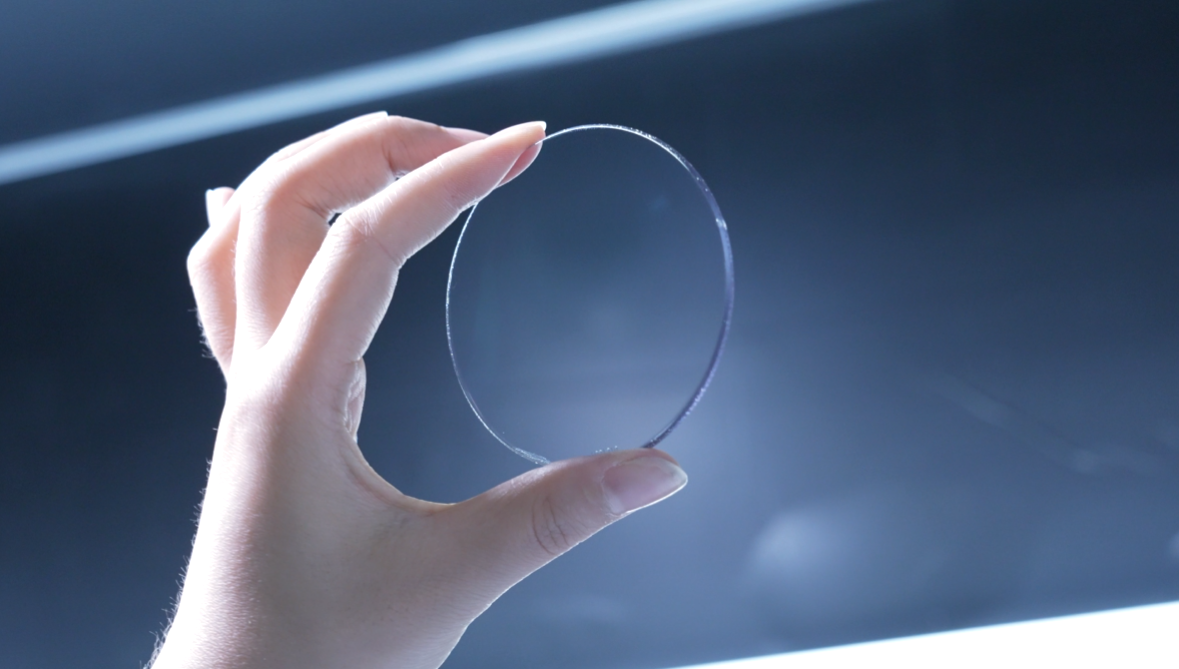
Lens inspection at HONGCHEN Optical supports routine optical and surface-quality verification for children’s and functional lens programs.
1. Impact-Resistant Children’s Lenses: Verify Durability Claims
This is the most straightforward of the three categories. Children are an active wearer group, and polycarbonate is widely used for daily-wear children’s eyewear because of its inherent impact resistance. HONGCHEN Optical’s 1.59 PC lens line is based on this material.
Buyers should ask any prospective supplier for the material specification, available power range, applicable impact-testing information, and routine optical-quality procedures rather than relying on general safety language. Impact resistance should be treated as a durability and breakage-resistance property.
It should not be presented as a vision-development, myopia-control, or myopia-management feature. A durable children’s lens can be an appropriate everyday product without making any claim about slowing myopia progression.
2. Blue-Light-Filtering Lenses: Keep Spectral Claims Separate from Myopia Claims
Blue-light-filtering lenses should be described in terms of their verified optical and spectral characteristics. HONGCHEN Optical’s 1.61 UV-filtering blue-light-filtering lens combines selected spectral filtering with anti-reflective performance, optical clarity, and controlled lens appearance according to the product specification.
Wholesale buyers should review applicable optical-quality requirements for the destination market, including relevant parts of the ISO 8980 series where applicable, together with transmission or spectral data, UV performance, lens color, residual AR reflection color, and coating-durability information.
This category should not be marketed as a myopia-control or myopia-management product unless that specific product has documented evidence and the claim is permitted in the target market. Claims about slowing myopia progression, treating eye disease, improving night-driving safety, or providing proven relief from digital eye strain should not be inferred from a standard blue-light-filtering lens.
3. Myopia-Management Lens Designs: Require Product-Specific Evidence
Myopia management is a distinct category with greater clinical and regulatory significance than a standard functional lens. Spectacle-lens designs in this category may use peripheral-defocus, lenslet- or segment-based, or other design-specific optical strategies; the mechanism and supporting evidence must be evaluated for the specific product being purchased.
Before listing a product as a myopia-management lens, buyers should ask the supplier to confirm in writing:
• The specific optical design and intended mechanism, rather than relying only on the phrase “myopia control” or “myopia management”.
• Whether the product is positioned as a true myopia-management design or as a general student/daily-wear lens; these are not equivalent claims.
• What clinical evidence supports that specific design, including the population studied, study duration, endpoints, and whether the evidence is directly applicable to the marketed product.
• How the product is positioned, registered, approved, or otherwise permitted to be marketed in the intended destination market, because claim requirements vary by jurisdiction.
• What fitting measurements, dispensing steps, follow-up requirements, or professional oversight are required for the design under local rules.
• What remake, non-adaptation, or fitting-support policy applies to the specific design, especially for first-time trial programs.
A supplier should not claim or imply that a lens treats myopia or reliably slows myopia progression unless that claim is supported by documented clinical evidence for the specific design and is permitted in the target market. Company-level registrations, quality-system certificates, or general lens documentation are not substitutes for product-specific evidence supporting a myopia-management claim.
RX Processing, Coating, and Batch Consistency
Manufacturing discipline matters across all three categories, but manufacturing capability should be evaluated separately from clinical evidence. Advanced surfacing equipment can support accurate customized RX production; it does not, by itself, establish that a specific myopia-management design is clinically effective.
HONGCHEN Optical’s RX equipment platform includes three Schneider HSC Modulo ONE high-speed freeform generators, Satisloh VFT-orbit-2i digital generating equipment, and Multi-FLEX-2 fully automated polishing systems. The HSC Modulo ONE and VFT-orbit-2i provide complementary digital generating capacity, while Multi-FLEX-2 supports automated polishing across different RX geometries and lens diameters.
Coating and inspection procedures should also be controlled according to the selected specification. Optical power, cylinder axis, addition, surface quality, and coating appearance are inspected under established quality-control procedures, while batch or laboratory testing can be used to evaluate coating durability, hydrophobic performance, and optical transmission where applicable.
For repeat-order functional products, buyers should ask suppliers how they control batch-to-batch variation in material formulation, thermal curing, photochromic appearance, and AR reflection color. A reliable supplier should be able to explain the process controls used rather than relying only on general claims of consistency.
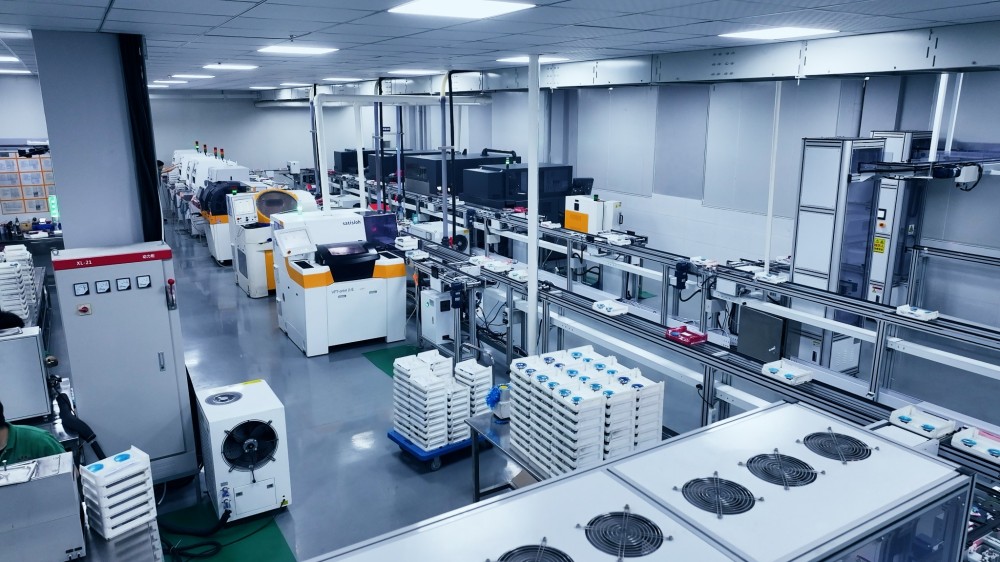
HONGCHEN Optical’s digital RX laboratory supports customized prescription production across multiple freeform lens designs.
Order-to-Delivery Coordination
Multi-store retail networks benefit from structured digital order submission because consistent prescription and order formats can reduce manual re-entry and lower the risk of transcription errors. For design-specific myopia-management products, buyers should also confirm what wearer measurements, fitting data, and order-validation steps are required before production.
Standard RX orders from HONGCHEN Optical’s Danyang, Jiangsu production base can be completed in as little as 48 hours, depending on lens material, coating, prescription complexity, design, and order confirmation. Products with specialized myopia-management designs or additional fitting and verification requirements may require different processing timelines.
Conclusion: Keep the Three Categories Separate
A strong children’s lens program starts with not conflating impact resistance, blue-light filtering, and true myopia-management design. Each category has a different purpose, a different evidence threshold, and in some markets a different regulatory or dispensing pathway.
HONGCHEN Optical (JIANGSU HONGCHEN OPTICAL CO., LTD.) supports distributors, optical chains, and RX labs with nearly 40 years of lens-manufacturing experience, an ISO 13485 quality management system, current FDA registration, organized CE documentation, finished-stock capability, and an integrated digital RX production base.
For any product intended to be listed as a myopia-management lens, wholesale buyers should request the design description, product-specific clinical evidence, market positioning, fitting requirements, and relevant supporting documentation before making efficacy claims. For current product specifications, material availability, RX options, and wholesale terms, please contact HONGCHEN Optical directly or visit https://www.hc-optical.net/.
Frequently Asked Questions
Are impact-resistant children’s lenses the same as myopia-management lenses?
No. Impact resistance is a durability and safety-related property. It does not by itself indicate that a lens is designed or evidenced to manage myopia progression.
Do blue-light-filtering lenses slow myopia progression?
A standard blue-light-filtering lens should not be marketed as slowing myopia progression unless that specific product has supporting clinical evidence and the claim is permitted in the destination market.
What should a buyer request before listing a myopia-management lens?
Request the design mechanism, product-specific clinical evidence, intended population, market or regulatory positioning, fitting and dispensing requirements, quality-control information, and any professional follow-up requirements.
What should buyers verify for impact-resistant children’s lenses?
Verify the lens material, available power range, applicable impact-testing information, optical-quality procedures, coating specification, and any product-specific safety documentation required by the destination market.
How fast can standard RX orders be completed?
Standard RX orders can be completed in as little as 48 hours depending on lens material, design, coating, prescription complexity, and order confirmation. Specialized designs may require different processing timelines.
Website Publishing Information
| SEO Title | Children’s & Myopia-Management Lens Buyer Checklist | HONGCHEN Optical |
| Meta Description | A wholesale buyer’s guide to children’s lenses, covering impact-resistant polycarbonate, blue-light filtering, myopia-management evidence, RX processing, QC, and compliance. |
| Suggested URL Slug | childrens-myopia-management-lens-buyer-checklist |
| Primary GEO Topics | children’s optical lenses wholesale; myopia-management lens supplier; polycarbonate kids lenses; blue-light-filtering lenses; RX lens lab |
| Publishing Note | Publish the article and FAQ sections on the website. Enter this table’s SEO data in the CMS backend rather than displaying the table in the public article. |
Post time: Aug-02-2026